


Colin visits Denmark to see on-the-go reuse in action
By Colin O'Byrne
In early March, Zero Waste Europe invited Colin and 69 other experts to the Danish cities of Copenhagen and Aarhus for a two-day study of reusable packaging on-the-go.
Background
The EU Packaging & Packaging Waste Directive (PPWR), with its general provisions entering into force as national legislation on 12 August 2026, is expecting cities and businesses across Europe to move towards packaging reuse. That’s all well and good, but how are we going to do this when we do not have any working systems in place – has putting the cart before the horse ever really worked?
The problem we face is the proliferation of single-use packaging, at home and on the streets. So, would an outright ban on disposable packaging work? No, it wouldn't. Not without a functioning, easy-to-use, re-use system in place. Lisbon looked to put the cart before the horse by banning single-use plastic cups. The trouble was, there was no re-use infrastructure or return incentives (like a levy) in place to accommodate this change;, the result was an increase in litter and waste in the city, not less.
Ban-oriented legislation, without first having working systems in place, is inviting failure, which is why we need to find a reuse system that works for Ireland. But not only that, we need to make sure that single-use packaging is not the default option for retailers.
As things stand, single-use packaging gives the appearance of being the cheaper option but looks can be deceiving. The truth is that single-use packaging at the point of sale is only a fraction of the true cost; the rest follows it quietly through the system, from bin to collection and onto incinerator, to say nothing of the litter and overflowing bins. In other words, without legislation to level up the playing field, so that the cost of single-use cups reflect the entirety of their economic impact and not just the cheap upfront payment, so that the cost of single-use cups reflect the entirety of their economic impact and not just , it won’t make economic sense for businesses and customers to pivot to re-usable options, and conditions will not be there for reuse systems to compete viably.
Foundations must be laid to prepare Irish people and retailers for reuse. So, with that in mind, we sent Colin to find out what the Danish are doing to put their horse before the cart …
Day 1 - Copenhagen
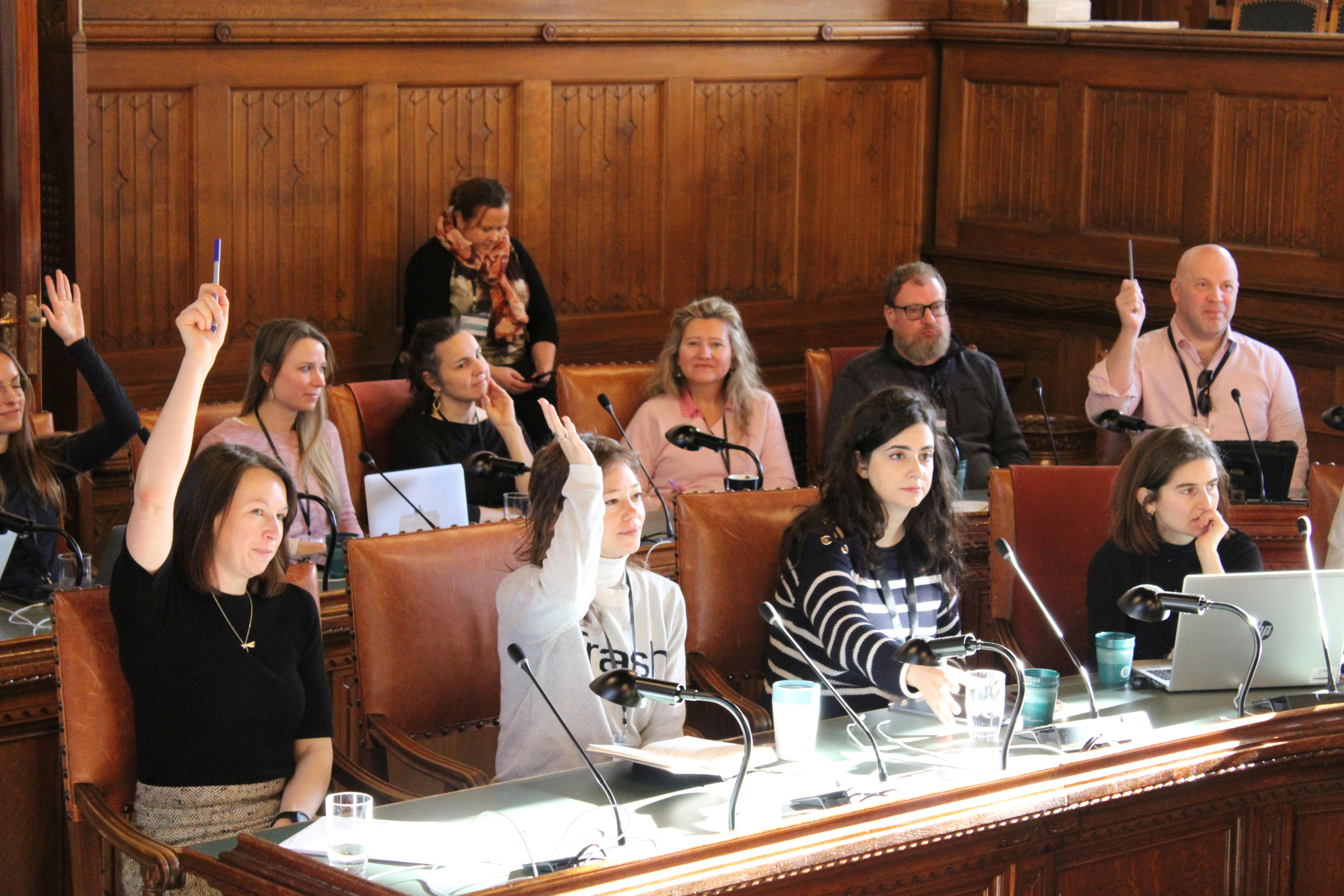
Zero Waste Europe, in partnership with the cities of Aarhus and Copenhagen, and with the support of Tomra and New Loop, hosted a two-day tour in Denmark. They invited city officials, policymakers, civil society organisations, producer responsibility organisations and reuse entrepreneurs – and VOICE! - to come together and explore how cities can scale reuse systems that actually work.
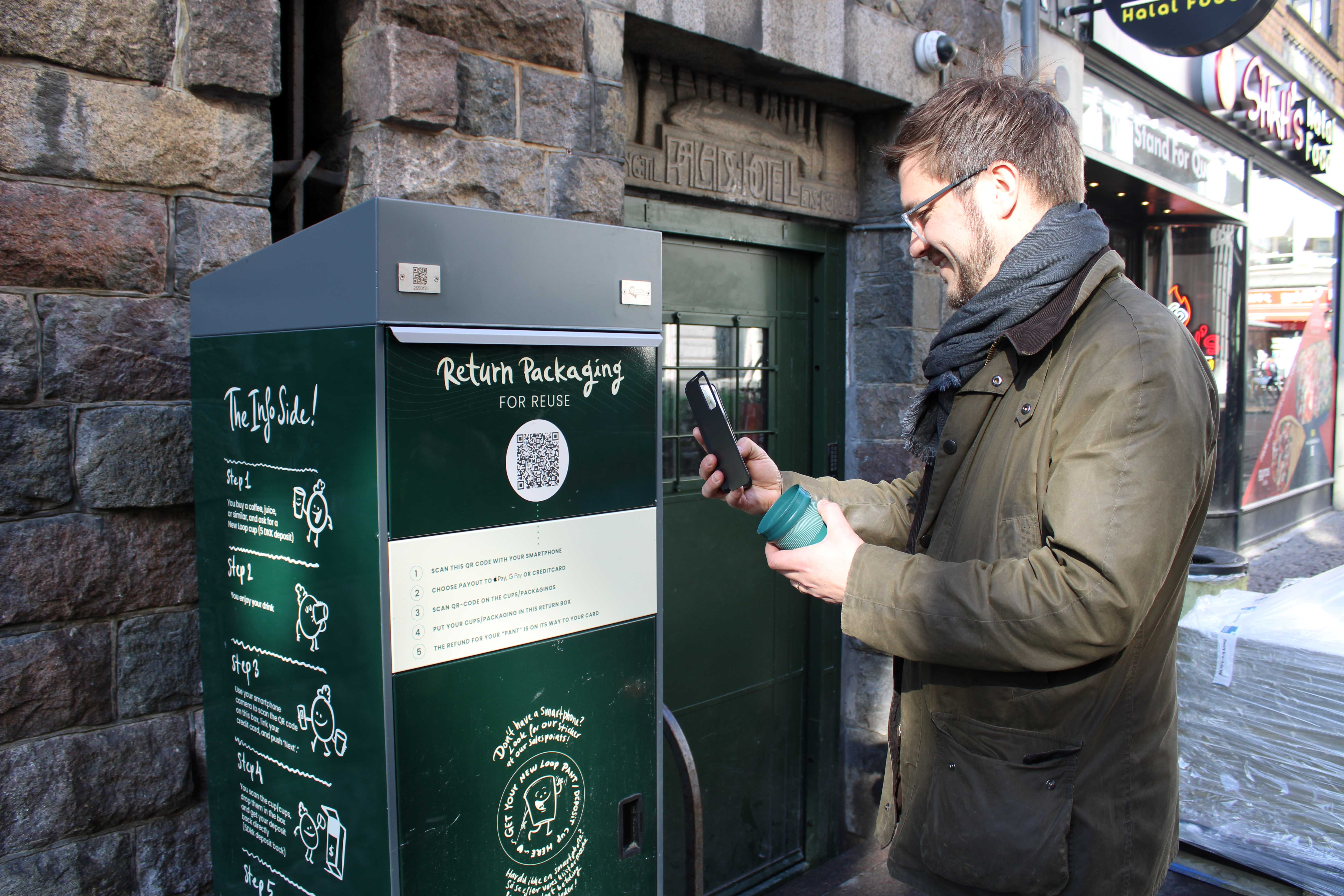
We were made very welcome in the Copenhagen’s City Hall. Here, where we were spoken to by both the Council, who kick-started the re-use initiative, and by New Loop, the system operator. With 34 return points across the city center, Copenhagen’s reuse system has been in operation since October 2025. Operated by New Loop, they have placed solar-powered return vending machines around popular parts of the city to make the system easy to use and access. No apps. No cash. Just a credit/debit card and your phone. Easy.
The reuse system itself is made to be self-sufficient and market-driven. Yet, to support scaling, an innovation pool was developed whereby businesses who commit to re-use could receive 100,000-300,000 DKK in financial support from the city. This helps businesses to cover implementation costs and, in some cases, a smaller indoor return machine, with funding increasing based on how many single-use packaging items the participating units or chains use.
Like Ireland there is no supportive legislation that would either makes reuse mandatory for take-away or bring in a levy on disposable packaging. It is the hope of the he Council, New Loop, and everyone else involved in the initiative in Copenhagen that this happens soon. It’s early days for this project but results are promising.
Day 2 - Aarhus
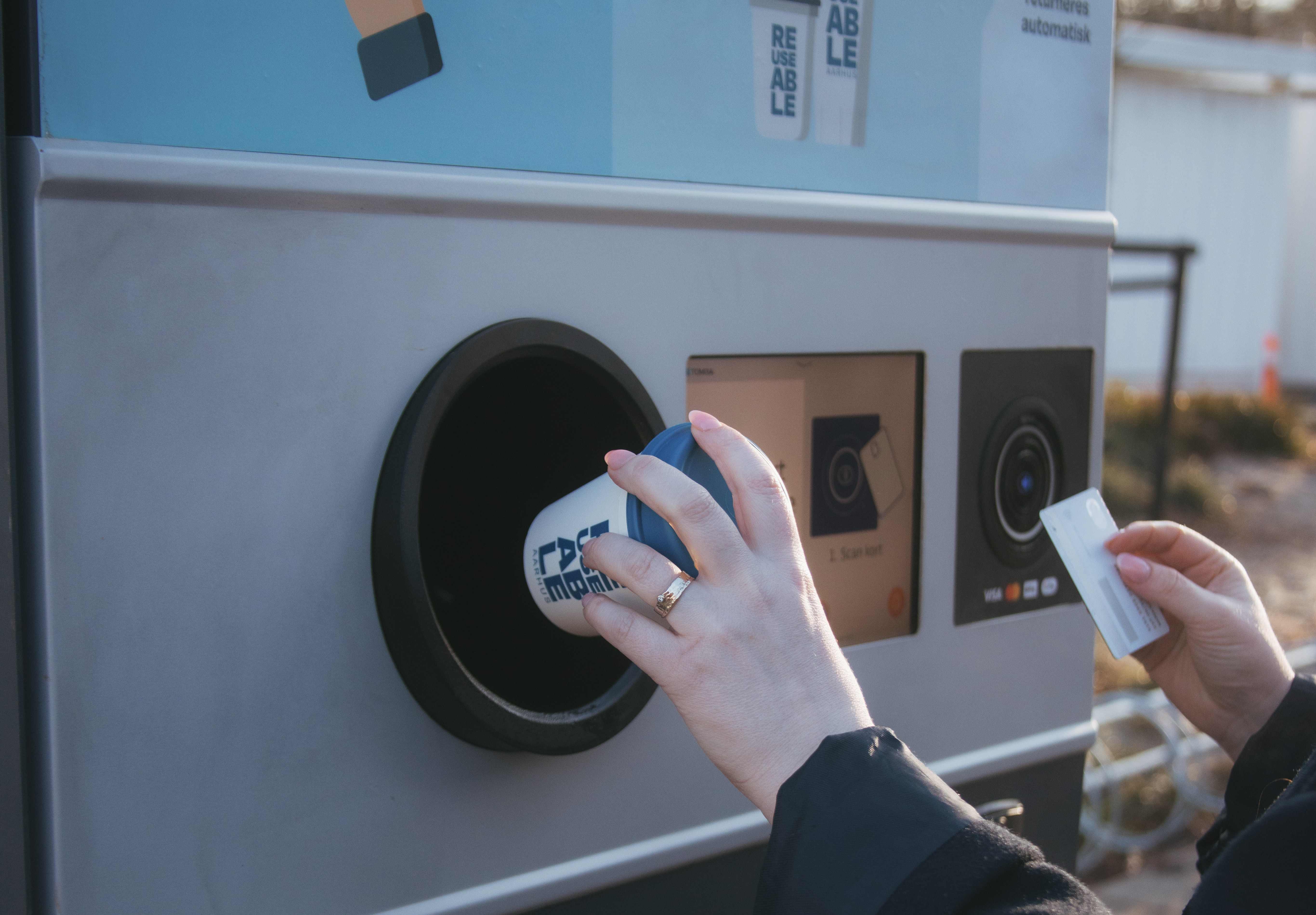
On day two, we were taken around the second largest city in Denmark, called Aahaus called Aarhus (people of a certain vintage are probably humming the Madness song but no, it’s pronounced Or-[h]us. Something like that!). Here a different reuse system has been in place for the last two years. Run by systems operator TOMRA, they provide the tech,machinery, and logistics, and have to date displaced 20 plus tonnes of waste – or 16,000 full on-street bins - and achieved a return rate of 88%.
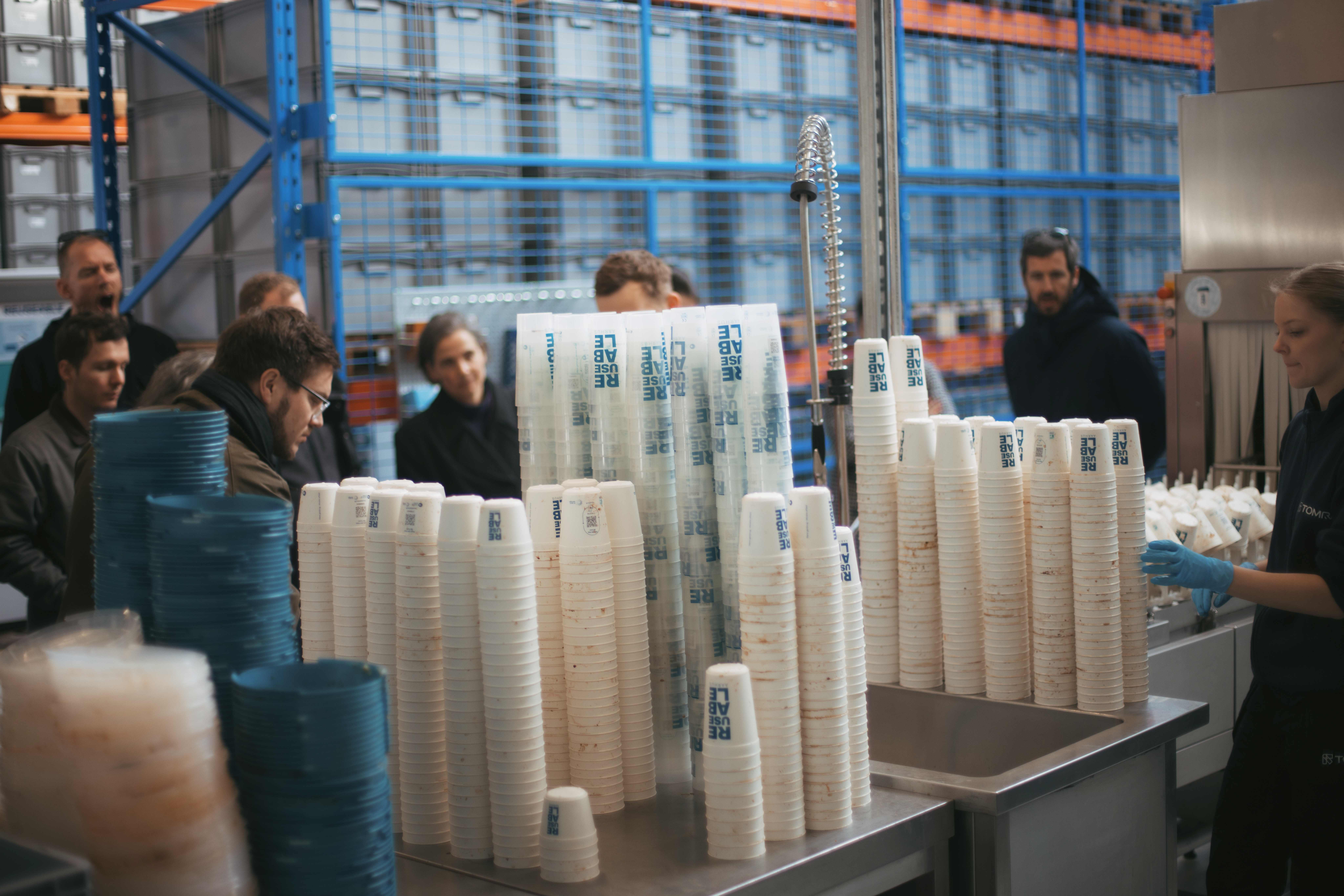
We were given a tour of TOMRA’s wash and distribution facilities. The dishwasher for the packaging is quite possibly the biggest washing machine I’ve seen in my life! This is necessary, however. If the system providers can’t guarantee that the packaging is cleaned and stored to the highest standards, then why should anyone buy into it?
Following this tour, we brought to council offices in Aarhus where presentations were given by city officials, Tomra, and a local cafe owner, who enthusiastically extolled the virtues of the re-use pilot for his business. In fact, since its inception, a number of HoReCa outlets have switched all of their stock to re-use.
Unlike the Copenhagen example, Aarhus’s system includes providing reuse packaging for festivals and events (their Event Solution). This increases their impact massively, with a recorded 150,000 container rotations with a 94% return rate. Impressive stuff.
Evidence was presented to us that over 50 businesses participate in the system today, and that less than 1% of the reusable cups end up in city waste bins. On the whole, it was a very impressive display by TOMRA and the Reusable system.
Differences between cities
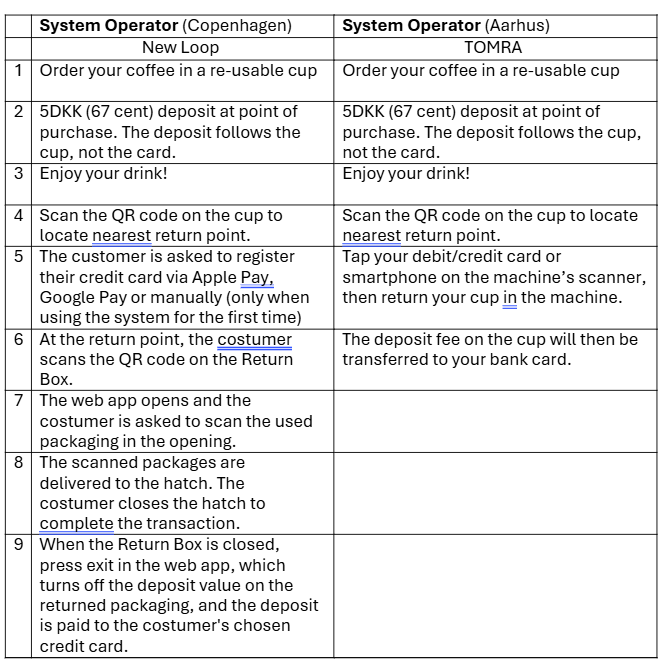
The respective systems of New Loop and TOMRA have more in common than in difference. Both systems address the problem of single-use packaging and on-the-go waste in practical, easy-to-use systems, and both began when city council decided that they’d had enough single-use waste, They both record high engagement rates and measurable achievements in terms of waste reduction and stakeholder buy-in.
.png)
On the whole, the return machines in Aarhus were heavier and more techy than the ones in Copenhagen, but the interaction was smoother and quicker. But the increase in ease is relative to the respective costs. New Loop’s machines, as per the specs outlined by the Council, are not tech heavy and so require some additional steps to use. What they lack for in terms of immediacy, they make up for in terms of cost. It all comes down to priority and to budget. Regardless of these differences, these pilots show that reuse is both feasible and scalable – if supported by the right economic and policy conditions.
A lot of what we learned in Denamrk was not new to us, most notably:
Pricing: Reusable packaging must cost the same as single-use options in local markets. Currently, the true cost of single-use cups and packaging is not factored into its price (water, resource use, litter, waste management). We need policies that account for this so that businesses, retailers, cafes and catering businesses do not get penalized financially for making the switch to reuse (even if it means subsidising in the short term).
Upselling: This is an issue that we saw first-hand in our Fingal Reusable Cup Project. Staff need to proactively offer reusable packaging instead of the single-use option. Otherwise, customers (and staff) will default to the disposable packaging. Sometimes, staff are slow to do this for reasons of ease, or in other cases, for reasons associated with branding. Regardless, in order to success, these projects require buy-in not only from the customer, but from the vendor, too.
Both systems are learning as they scale. A set of shared principles emerged from the learnings of Aarhus and Copenhagen that are directly relevant for any city or region looking to scale reuse:
- Public procurement is a driver of performance and urban design – rather than waiting for the market to act, both cities commissioned the systems they wanted to see. They’ve included environmental performance requirements and clear criteria in their tenders to ensure the system is built to scale and with convenience, safety, and urbanistic rules in mind. Going forward, aligning public procurement rules around reuse systems will also be essential to make local systems work together and be mutually compatible. Take note, policy makers!
- Convenience is non-negotiable – dense return point networks, fast & easy returns, and cashless systems all reduce the teething problems that usually kill adoption of new models Ultimately, unless the system is easy to use, it stands little chance of success with the general public.
- A deposit system is necessary for containers to be kept within the loop. As we’ve seen with our own deposit return scheme, setting the right deposit value needs careful thinking – it needs to hit the Goldilocks zone: too high, it can put people off, and if too low then it’s hardly worth your time.
- Retailers need cost neutrality – both TOMRA and New Loop have evidence that reuse pricing must be comparable to single-use ones for systems to be willingly adopted by both businesses and customers. In turn, this requires identifying who needs support to make it work.
- Political support and engagement make a difference – in Aarhus, city representatives went door-to-door with retailers to explain the city’s waste-reduction strategy and get businesses on board, and it clearly worked.
- National legislation is the missing piece in Denmark (as well as Ireland) – both cities agreed that taxes on single-use and mandatory reuse requirements are essential to scale these systems and make the full shift to reusables. Unlike in Germany, where cities recognise the right to introduce their own tax on single-use packaging for take-away, the Danish context requires the national government to step in. The path to setting strong enough incentives (e.g., taxes/levys or bans) on single-use items, while necessary, may differ across national and local contexts.


