


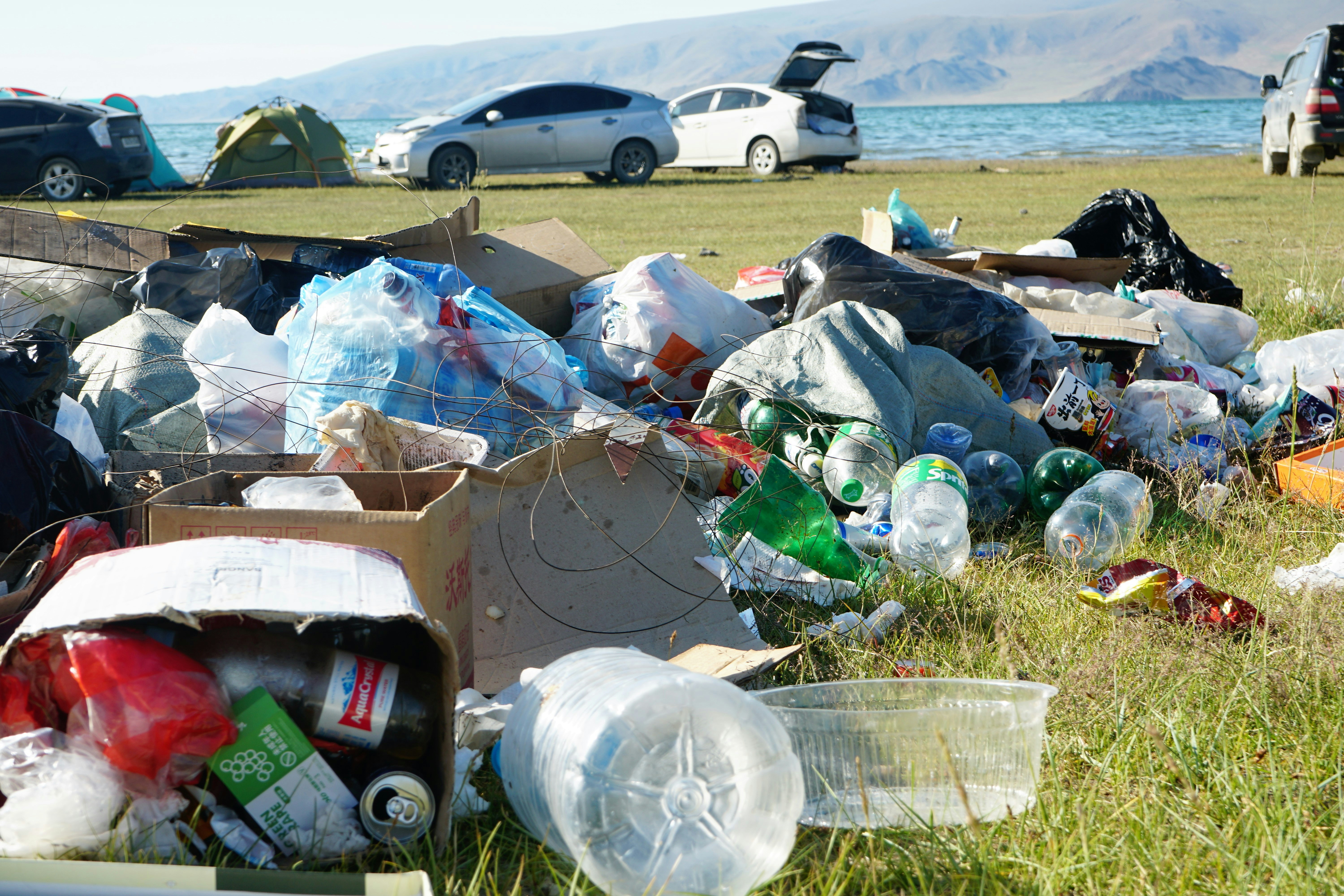
Most of us love going to festivals, for the music, the craic, and the temporary community that springs up around them.

This weekend sees one of the biggest music festivals in Ireland, Electric Picnic. Every year in the run up, the question on everyone’s lips is “Are there any tickets?”.
Yet the week after the pictures will emerge of overflowing bins and abandoned tents, and the question then becomes ‘Why did that happen…. again?’.
And this is not to pick on any one festival; it is the question asked after every major festival in Ireland.
Should they be encouraging recycling (yes),
should they be encouraging people to bring home their tents (yes),
should they be supporting reusables (yes).
But where does the problem stem from? Is it the festival goers? is it the festival organisers? or is it a reflection of a larger issue that we, as a society, are failing to grapple with?
Festival organisers do more than just putting on a few gigs in a field. They are creating an experience, a vibe, a hideaway from the world at large where we can let loose. To do that the organisers curate everything from the vendors, the acts to the layout of the space itself.
This gives the festival organiser a lot of control on the materials that may become waste during and after the event.
There is a lot that can be done (and often is nodded to) around ensuring Vendors avoid single use plastics and ensuring that all single-use packaging on site is at the very least uniform – all can go into compost bin say, making the waste much easier to dispose of correctly at 2 in the morning. And there are great examples of festivals doing just that. They can ensure that there is an atmosphere that encourages participants to mind their space, and again there are examples of just that. They can and certainly should be encouraging people to mind their tents, leave no trace and bring out what they pack in.
The key to all of that is that it takes planning, coordination and consistency.
But festivals are still a collection of us, society at large. And society is still stuck on a single use mindset – we have failed to uncouple waste from economic activity.
The €20 tent is not going to last much longer than a weekend. The price is low to the buyer, because someone and somewhere else is paying the true cost. The cost of the resources used the emissions in its manufacture and transport and the environmental and financial cost of its management as waste. Similarly, we cannot expect people to instantly adopt a new reusable system if the first time they encounter it is underneath some chips between acts on a Saturday evening.
If we are serious about reducing waste at festivals and not repeating the headline, that means we need to be serious for the rest of the year. Serious about reducing waste, and serious about reuse systems at scale, and serious about durable, repairable products the norm.
The waste at this year's festival is already locked in. The organisers can take steps to reduce waste next year. There are many smaller, and locally run festivals doing amazing work and showing that there are options for plastic free and zero waste approaches. But at the scale of the large music festivals, we need to be realistic about our expectations. The work of changing from a single-use to a circular mindset, will not happen in a field on a weekend.
So, the real question isn’t why did this happen, but what are we doing to prevent it?
Photo by Ariungoo Batzorig on Unsplash


